
Boat and Stream is an important chapter in quantitative aptitude. It is closely related to time, speed, and distance, but it has one extra idea: the speed of water current. When a boat moves with the current, its effective speed increases. When it moves against the current, its effective speed decreases.
This topic is common in banking exams, SSC, railway exams, CAT-level aptitude basics, campus placements, and other competitive tests. The questions usually ask for downstream speed, upstream speed, speed of boat in still water, speed of stream, time taken, distance covered, or ratio-based results.
This updated article keeps the existing formulas and images already present in the post. New content has been added to explain every formula in simple language with tables, solved examples, shortcuts, practice questions, and FAQs.
Meaning of Boat and Stream
A boat can move in still water with its own speed. A stream or river also has its own flow speed. When both speeds act together, the actual speed of the boat changes.
If the boat moves in the same direction as the stream, it is moving downstream. If the boat moves against the stream, it is moving upstream.
Important Terms
| Term | Meaning |
|---|---|
| Still water | Water with no current or flow |
| Stream | Flowing water or current |
| Downstream | Direction in which water flows |
| Upstream | Direction opposite to water flow |
| Boat speed | Speed of boat in still water |
| Stream speed | Speed of current |
Existing Boat and Stream Formulas
if the speed of a boat in still water is u km/h & the speed of the streams of v km/h than-
speed towards downstream- 
Speed towards up stream- 
if the speed of boat in downstream u km/h and in upstream v km/h
than speed in still water-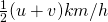
rate or speed of stream=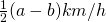
Basic Formulas
Let the speed of boat in still water be b km/h and the speed of stream be s km/h.
| Case | Formula |
|---|---|
| Downstream speed | b + s |
| Upstream speed | b – s |
| Boat speed in still water | (Downstream speed + Upstream speed) / 2 |
| Stream speed | (Downstream speed – Upstream speed) / 2 |
| Time | Distance / Speed |
| Distance | Speed x Time |
These formulas are the base of the whole chapter. Most questions can be solved by identifying downstream speed and upstream speed correctly.
Downstream Speed
Downstream means the boat moves with the flow of water. The stream helps the boat, so the speed increases.
Downstream speed = Speed of boat in still water + Speed of stream.
Example: A boat moves at 12 km/h in still water and the stream speed is 3 km/h. Find downstream speed.
Downstream speed = 12 + 3 = 15 km/h.
Upstream Speed
Upstream means the boat moves against the flow of water. The stream opposes the boat, so the speed decreases.
Upstream speed = Speed of boat in still water – Speed of stream.
Example: A boat moves at 12 km/h in still water and the stream speed is 3 km/h. Find upstream speed.
Upstream speed = 12 – 3 = 9 km/h.
Finding Boat Speed and Stream Speed
If downstream speed and upstream speed are given, add them to find twice the boat speed. Subtract them to find twice the stream speed.
Boat speed in still water = (Downstream + Upstream) / 2.
Stream speed = (Downstream – Upstream) / 2.
Example: A boat travels downstream at 20 km/h and upstream at 12 km/h. Find the speed of boat in still water and speed of stream.
Boat speed = (20 + 12)/2 = 16 km/h.
Stream speed = (20 – 12)/2 = 4 km/h.
Time and Distance in Boat Questions
Boat and stream questions also use the basic formula of time and distance.
Time = Distance / Speed.
Distance = Speed x Time.
Use downstream speed when the boat moves with the stream. Use upstream speed when it moves against the stream.
Example: A boat has downstream speed 18 km/h. How much time will it take to cover 72 km downstream?
Time = 72/18 = 4 hours.
Example: A boat has upstream speed 10 km/h. How much distance will it cover upstream in 3 hours?
Distance = 10 x 3 = 30 km.
Round Trip Questions
In many questions, a boat goes downstream and returns upstream over the same distance. In such cases, use downstream speed for the first journey and upstream speed for the return journey. Total time is the sum of both times.
Example: A boat travels 60 km downstream and returns 60 km upstream. Its speed in still water is 15 km/h and stream speed is 5 km/h. Find total time.
Downstream speed = 15 + 5 = 20 km/h.
Upstream speed = 15 – 5 = 10 km/h.
Downstream time = 60/20 = 3 hours.
Upstream time = 60/10 = 6 hours.
Total time = 3 + 6 = 9 hours.
Average Speed for Downstream and Upstream Journey
When a boat travels equal distance downstream and upstream, average speed is not the simple average of the two speeds. Since distances are equal, use:
Average speed = 2xy / (x + y), where x and y are downstream and upstream speeds.
Example: Downstream speed is 20 km/h and upstream speed is 10 km/h. Find average speed for equal distance both ways.
Average speed = 2 x 20 x 10 / (20 + 10) = 400/30 = 13.33 km/h.
When Time Difference Is Given
Sometimes a question says that the boat takes more time upstream than downstream for the same distance. Since upstream speed is lower, upstream time is greater. Use the time difference to form an equation.
Example: A boat speed in still water is 12 km/h and stream speed is 3 km/h. How much more time will it take to travel 45 km upstream than downstream?
Downstream speed = 15 km/h. Upstream speed = 9 km/h.
Downstream time = 45/15 = 3 hours.
Upstream time = 45/9 = 5 hours.
Difference = 5 – 3 = 2 hours.
Finding Distance from Time Difference
If speed of boat and stream are known and the difference between upstream and downstream time is given, distance can be found using time equations.
Example: A boat speed in still water is 10 km/h and stream speed is 2 km/h. It takes 1 hour more upstream than downstream for the same distance. Find the distance.
Downstream speed = 12 km/h.
Upstream speed = 8 km/h.
Let distance be D.
D/8 – D/12 = 1.
(3D – 2D)/24 = 1.
D = 24 km.
Finding Stream Speed from Upstream and Downstream Times
If the same distance is covered downstream and upstream in given times, first calculate downstream and upstream speeds using speed = distance/time. Then use the half-sum and half-difference formulas.
Example: A boat travels 48 km downstream in 3 hours and 48 km upstream in 6 hours. Find boat speed in still water and stream speed.
Downstream speed = 48/3 = 16 km/h.
Upstream speed = 48/6 = 8 km/h.
Boat speed = (16 + 8)/2 = 12 km/h.
Stream speed = (16 – 8)/2 = 4 km/h.
Ratio Based Boat and Stream Questions
Ratio questions are common in aptitude exams. Convert the ratio into variables and use the given distance or time.
Example: The ratio of boat speed in still water to stream speed is 5:1. A boat covers 72 km downstream in 3 hours. Find upstream speed.
Let boat speed = 5x and stream speed = x.
Downstream speed = 6x.
Downstream speed = 72/3 = 24 km/h.
So 6x = 24, x = 4.
Boat speed = 20 km/h and stream speed = 4 km/h.
Upstream speed = 20 – 4 = 16 km/h.
Still Water Speed Greater Than Stream Speed
In normal boat and stream questions, boat speed in still water must be greater than stream speed for upstream movement. If stream speed is equal to or greater than boat speed, the boat cannot move upstream in the usual sense.
Example: If boat speed is 8 km/h and stream speed is 10 km/h, then upstream speed = 8 – 10 = -2 km/h. A negative result means the current is stronger than the boat’s own speed.
Shortcuts to Remember
- Downstream means add stream speed.
- Upstream means subtract stream speed.
- Boat speed is half of downstream plus upstream.
- Stream speed is half of downstream minus upstream.
- For same distance, average speed is 2xy/(x + y).
- Use speed = distance/time in every time-based question.
Common Mistakes
- Adding stream speed in upstream cases.
- Subtracting stream speed in downstream cases.
- Using simple average for equal downstream and upstream distances.
- Forgetting that upstream speed is smaller than downstream speed.
- Using time formula with wrong speed.
- Not checking whether speed units are same.
Solved Examples
Example 1
A boat can travel at 18 km/h in still water. The stream speed is 4 km/h. Find downstream and upstream speeds.
Downstream speed = 18 + 4 = 22 km/h.
Upstream speed = 18 – 4 = 14 km/h.
Example 2
A boat travels downstream at 30 km/h and upstream at 18 km/h. Find boat speed and stream speed.
Boat speed = (30 + 18)/2 = 24 km/h.
Stream speed = (30 – 18)/2 = 6 km/h.
Example 3
A boat covers 90 km downstream in 3 hours. If stream speed is 5 km/h, find boat speed in still water.
Downstream speed = 90/3 = 30 km/h.
Boat speed = downstream speed – stream speed = 30 – 5 = 25 km/h.
Example 4
A boat covers 48 km upstream in 4 hours. If boat speed in still water is 15 km/h, find stream speed.
Upstream speed = 48/4 = 12 km/h.
Stream speed = boat speed – upstream speed = 15 – 12 = 3 km/h.
Example 5
A boat covers 40 km downstream in 2 hours and returns in 4 hours. Find boat speed and stream speed.
Downstream speed = 40/2 = 20 km/h.
Upstream speed = 40/4 = 10 km/h.
Boat speed = (20 + 10)/2 = 15 km/h.
Stream speed = (20 – 10)/2 = 5 km/h.
Example 6
A boat speed in still water is 20 km/h and stream speed is 5 km/h. Find the time to go 100 km downstream and return.
Downstream speed = 25 km/h, upstream speed = 15 km/h.
Downstream time = 100/25 = 4 hours.
Upstream time = 100/15 = 6.67 hours.
Total time = 10.67 hours.
Example 7
The downstream speed of a boat is 24 km/h and upstream speed is 16 km/h. Find average speed for equal distance downstream and upstream.
Average speed = 2 x 24 x 16 / (24 + 16) = 768/40 = 19.2 km/h.
Practice Questions
- A boat speed in still water is 14 km/h and stream speed is 3 km/h. Find downstream speed.
- A boat speed in still water is 14 km/h and stream speed is 3 km/h. Find upstream speed.
- Downstream speed is 28 km/h and upstream speed is 20 km/h. Find boat speed.
- Downstream speed is 28 km/h and upstream speed is 20 km/h. Find stream speed.
- A boat covers 60 km downstream in 2 hours. Find downstream speed.
- A boat covers 60 km upstream in 5 hours. Find upstream speed.
- A boat speed is 18 km/h and stream speed is 6 km/h. Find time for 72 km downstream.
- A boat travels 36 km upstream in 3 hours and 36 km downstream in 2 hours. Find boat speed and stream speed.
Answers to Practice Questions
- 17 km/h.
- 11 km/h.
- 24 km/h.
- 4 km/h.
- 30 km/h.
- 12 km/h.
- 3 hours.
- Boat speed = 15 km/h, stream speed = 3 km/h.
Frequently Asked Questions
What is downstream speed?
Downstream speed is the speed of a boat when it moves with the current. It is boat speed plus stream speed.
What is upstream speed?
Upstream speed is the speed of a boat when it moves against the current. It is boat speed minus stream speed.
How do we find boat speed in still water?
Add downstream speed and upstream speed, then divide by 2.
How do we find stream speed?
Subtract upstream speed from downstream speed, then divide by 2.
Which speed is greater, upstream or downstream?
Downstream speed is greater because the stream helps the boat move.
Can upstream speed be zero?
Yes. If boat speed and stream speed are equal, the boat does not make progress upstream.
What formula is used for time?
Time = Distance / Speed. Use downstream speed for downstream travel and upstream speed for upstream travel.
Revision Notes
Boat and Stream questions become easy when upstream and downstream speeds are clear. Downstream means the current helps the boat, so add. Upstream means the current opposes the boat, so subtract.
If both upstream and downstream speeds are given, use half-sum for boat speed and half-difference for stream speed. If distance and time are given, first find the required speed, then apply the boat and stream formulas.
Advanced Boat and Stream Question Types
After learning the basic formulas, the next step is to recognise the question type quickly. Most exam questions do not directly say “find downstream speed.” Instead, they give distance, time, ratio, or the difference between times. If you can convert the statement into upstream speed and downstream speed, the calculation becomes simple.
A good approach is to write two columns: downstream and upstream. In the downstream column, write speed as boat + stream. In the upstream column, write speed as boat – stream. Then put the given time or distance under the correct column.
Finding Boat Speed When Stream Speed Is Given
If downstream or upstream speed is given along with stream speed, boat speed can be found directly.
For downstream:
Boat speed = Downstream speed – Stream speed.
For upstream:
Boat speed = Upstream speed + Stream speed.
Example: A boat travels downstream at 32 km/h. The stream speed is 6 km/h. Find speed of boat in still water.
Boat speed = 32 – 6 = 26 km/h.
Example: A boat travels upstream at 14 km/h. The stream speed is 4 km/h. Find speed of boat in still water.
Boat speed = 14 + 4 = 18 km/h.
Finding Stream Speed When Boat Speed Is Given
If boat speed is known and upstream or downstream speed is also known, stream speed can be found by subtraction.
Example: A boat can row at 25 km/h in still water. Its downstream speed is 31 km/h. Find stream speed.
Stream speed = 31 – 25 = 6 km/h.
Example: A boat can row at 25 km/h in still water. Its upstream speed is 19 km/h. Find stream speed.
Stream speed = 25 – 19 = 6 km/h.
When Total Time for Going and Returning Is Given
Some questions give total time for a round trip. In these questions, write downstream time and upstream time separately, then add them.
Example: A boat speed in still water is 9 km/h and stream speed is 3 km/h. It goes to a place and returns. Total time is 5 hours. Find one-way distance.
Downstream speed = 12 km/h and upstream speed = 6 km/h.
Let one-way distance be D.
D/12 + D/6 = 5.
D/12 + 2D/12 = 5.
3D/12 = 5, so D/4 = 5.
D = 20 km.
When Downstream Time and Upstream Time Are in Ratio
If the same distance is covered downstream and upstream, then time ratio is inverse of speed ratio. Since upstream speed is less, upstream time is more.
Example: For the same distance, downstream time and upstream time are in the ratio 2:3. If stream speed is 5 km/h, find boat speed in still water.
For same distance, speed ratio is inverse of time ratio.
Downstream speed : upstream speed = 3:2.
Let downstream speed = 3x and upstream speed = 2x.
Stream speed = (3x – 2x)/2 = x/2.
x/2 = 5, so x = 10.
Boat speed = (3x + 2x)/2 = 5x/2 = 25 km/h.
Using Relative Speed Idea
Boat and stream is a form of relative speed. The boat has its own speed, and the stream has another speed. When both act in the same direction, the speeds add. When they act in opposite directions, they subtract. This is similar to two people moving in the same or opposite directions in time and distance problems.
Thinking in this way helps students avoid memorising too many formulas. Downstream is “same direction,” so add. Upstream is “opposite direction,” so subtract.
Speed of Man in Still Water
Some questions use the word man instead of boat. The method is exactly the same. Speed of man in still water means his rowing speed without the effect of current. If his speed with current and against current are given, use half-sum and half-difference.
Example: A man rows at 18 km/h with the current and 10 km/h against the current. Find his speed in still water and speed of current.
Speed in still water = (18 + 10)/2 = 14 km/h.
Speed of current = (18 – 10)/2 = 4 km/h.
Mixed Solved Examples
Example 8
A boat goes 45 km downstream in 3 hours and 30 km upstream in 3 hours. Find downstream speed and upstream speed.
Downstream speed = 45/3 = 15 km/h.
Upstream speed = 30/3 = 10 km/h.
Boat speed = (15 + 10)/2 = 12.5 km/h.
Stream speed = (15 – 10)/2 = 2.5 km/h.
Example 9
A boat’s downstream speed is 5 km/h more than its upstream speed. Find stream speed.
Downstream – upstream = 2 x stream speed.
So 5 = 2 x stream speed.
Stream speed = 2.5 km/h.
Example 10
A boat can travel 16 km downstream in 1 hour and the speed of stream is 2 km/h. Find the time required to travel 28 km upstream.
Downstream speed = 16 km/h.
Boat speed = 16 – 2 = 14 km/h.
Upstream speed = 14 – 2 = 12 km/h.
Time = 28/12 = 7/3 hours = 2 hours 20 minutes.
Example 11
A boat travels 30 km downstream and 18 km upstream in 3 hours. Its speed in still water is 12 km/h. Find stream speed.
Let stream speed be s.
Downstream speed = 12 + s and upstream speed = 12 – s.
Equation: 30/(12 + s) + 18/(12 – s) = 3.
By checking simple values, s = 2 gives 30/14 + 18/10 = 2.14 + 1.8 = 3.94, so it is not correct. Such questions may require algebra or options. In objective exams, substitute answer options into the equation and choose the value that satisfies the total time.
The important learning is to form the correct equation first.
Extra Practice Questions
- A man rows downstream at 21 km/h and upstream at 15 km/h. Find speed in still water.
- A man rows downstream at 21 km/h and upstream at 15 km/h. Find stream speed.
- A boat speed is 16 km/h and current speed is 4 km/h. Find average speed for equal distance downstream and upstream.
- A boat travels 80 km downstream in 4 hours. If stream speed is 3 km/h, find upstream speed.
- A boat goes downstream in 2 hours and upstream in 3 hours for the same distance. If stream speed is 4 km/h, find boat speed.
- The downstream speed is 40 km/h and boat speed in still water is 34 km/h. Find upstream speed.
- A boat takes 2 hours downstream for 36 km. It takes 3 hours upstream for the same distance. Find current speed.
- A boat speed is 20 km/h and stream speed is 5 km/h. Find time for a 50 km upstream journey.
Answers to Extra Practice Questions
- 18 km/h.
- 3 km/h.
- 15 km/h.
- 14 km/h.
- 20 km/h.
- 28 km/h.
- 3 km/h.
- 10/3 hours or 3 hours 20 minutes.
Final Exam Tips
Always identify whether the movement is with the current or against the current. Write downstream and upstream speeds before calculating time. If the same distance is used both ways, average speed should be handled carefully. If the question gives times, convert them into speeds using distance/time.
When options are available, substitution can be very fast in boat and stream questions. Form the equation first, then test options for stream speed or boat speed. This is often quicker than solving a long algebraic equation.
Conclusion
Boat and Stream is a direct application of speed, time, and distance. The only extra concept is the current of water. Once you understand how current changes the speed, the formulas are easy to apply.
For exams, practise downstream, upstream, round trip, time difference, ratio, and average speed questions. These patterns cover most problems asked from this topic.