
Mixture and Alligation is an important quantitative aptitude topic for SSC, banking, railway, state government exams, CAT basics and placement tests. It is formula based, but students score well only when they understand the situation behind the formula.
This lesson explains mixture and alligation in simple language with formulas, shortcuts, solved examples, practice questions and FAQs. The content is written in a step-by-step way so that beginners can follow it without difficulty.
What Is Mixture and Alligation?
Mixture and alligation is a method used to find the ratio in which two or more ingredients of different values should be mixed to obtain a desired mean value.
Important Terms
| Point | Details |
|---|---|
| Mixture | Combination of two or more ingredients |
| Alligation | Shortcut rule to find mixing ratio |
| Mean price | Average value of the mixture |
| Cheaper quantity | Ingredient with lower price or value |
| Dearer quantity | Ingredient with higher price or value |
Key Formulas
| Point | Details |
|---|---|
| Cheaper : Dearer | (Dearer price – Mean price) : (Mean price – Cheaper price) |
| Mean price | Total value / Total quantity |
| Replacement remaining | Original quantity x (1 – removed/total)^n |
| Total value | Quantity x price |
| Quantity | Total value / rate |
Existing Notes and Formula Images
Alligation- the rate to find the ratio in which two or more ingredients at the given price.must be mixed to produce a mixer of a desired price.
Mean price- the cost price of a unit remobilty of the mix are is called mean price.
Rule of allegation 
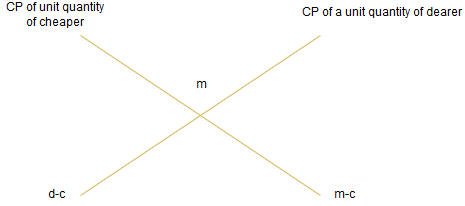
cheaper quantity: dearer quantity= (d-m): (m-c)
A container of x unit capacity of liquid, when we taken out some unit say x replaced by water, when we do the same operation n times.
quantity of pure liquid= ![[x(1-x^1/x)n]unit](https://www.ebhor.com/wp-content/ql-cache/quicklatex.com-2b2c5bfee9aff4e7d16bce2bc18a7ad7_l3.png "Rendered by QuickLaTeX.com")
Step-by-Step Method
- Write cheaper price, dearer price and mean price.
- Subtract diagonally using alligation rule.
- Form the ratio of cheaper quantity to dearer quantity.
- Use total quantity or total price if given.
- For replacement, use remaining original quantity formula.
Shortcut Tricks
- Mean price must lie between cheaper and dearer price.
- Use diagonal difference for ratio.
- For equal quantities, mean is simple average.
- For replacement questions, original liquid decreases each time.
- Convert percentages into values before alligation.
Common Question Types
| Point | Details |
|---|---|
| Price mixture | Mix two prices |
| Milk and water | Use purity percentage |
| Replacement | Remove and refill repeatedly |
| Average value | Find mean price |
| Ratio to quantity | Convert ratio into actual amounts |
Solved Examples
Example 1
Tea at Rs. 40/kg is mixed with tea at Rs. 60/kg to get mixture worth Rs. 50/kg. Find ratio.
Ratio = (60 – 50):(50 – 40) = 10:10 = 1:1.
Example 2
Milk of 80 percent purity is mixed with milk of 50 percent purity to get 70 percent purity. Find ratio.
Ratio = (70 – 50):(80 – 70) = 20:10 = 2:1.
Example 3
Find mean price of 2 kg at Rs. 30 and 3 kg at Rs. 40.
Total value = 60 + 120 = 180. Quantity = 5 kg. Mean = Rs. 36/kg.
Example 4
A 20 litre mixture has milk and water in ratio 3:1. Find milk.
Milk = 3/4 x 20 = 15 litres.
Example 5
10 litres is removed from 50 litres milk and replaced with water once. Find milk left.
Milk left = 50 x (1 – 10/50) = 40 litres.
Exam Style Examples
Question 1
Rice at Rs. 30/kg is mixed with rice at Rs. 45/kg to get Rs. 36/kg mixture. Find ratio.
Ratio cheaper:dearer = (45 – 36):(36 – 30) = 9:6 = 3:2.
Place mean price between both prices.
Question 2
How many litres of water should be added to 20 litres milk to make milk 80 percent?
Final mixture has 80 percent milk. 20 litres is 80 percent of final mixture, so final = 25 litres. Water added = 5 litres.
Purity percentage questions can be solved without alligation also.
Question 3
A vessel has 60 litres milk. 10 litres is removed and replaced by water two times. Find milk left.
Milk left = 60 x (1 – 10/60)^2 = 60 x (5/6)^2 = 41.67 litres.
Use replacement formula for repeated operation.
Common Mistakes
- Mean price written outside cheaper and dearer price.
- Reversing the ratio.
- Forgetting total quantity conversion.
- Using simple average when quantities are different.
- Applying replacement formula only once when operation repeats.
Practice Questions
- Mix Rs. 20 and Rs. 30 items to get Rs. 24. Find ratio.
- Mix 40 percent and 80 percent solutions to get 60 percent. Find ratio.
- Find mean price of 5 kg at Rs. 10 and 5 kg at Rs. 20.
- A mixture has milk:water = 4:1 in 25 litres. Find milk.
- A 40 litre vessel loses 10 litres and is refilled once. Find original left.
- Tea at Rs. 100 and Rs. 150 is mixed in ratio 2:3. Find mean.
- Find ratio for Rs. 12 and Rs. 20 to get Rs. 15.
- A 30 litre mixture has 24 litre milk. Find purity percent.
- How much water in 50 litres of 70 percent milk?
- A mixture of 10 and 30 in equal quantity has mean?
Answers to Practice Questions
- 3:2
- 1:1
- Rs. 15
- 20 litres
- 30 litres
- Rs. 130
- 5:3
- 80 percent
- 15 litres
- 20
Frequently Asked Questions
What is alligation?
Alligation is a shortcut method to find the ratio of ingredients in a mixture.
What is mean price?
Mean price is the average price or value of one unit of the mixture.
Can alligation be used for percentages?
Yes, it is used for purity, concentration, profit and price questions.
What is the replacement formula?
Remaining original quantity = original quantity x (1 – removed/total)^n.
What is the common mistake?
Many students reverse cheaper and dearer ratio.
Revision Notes
Alligation is mainly diagonal subtraction. The mean value must always lie between the two given values.
Revise formulas with one direct example and one word problem. This makes the rule easy to remember during exams.
Conclusion
Mixture and alligation becomes easy when cheaper, dearer and mean values are written in the correct order.
Additional Exam Practice Note
Mixture and Alligation questions often become simple after converting words into speed, quantity, ratio, price, distance or time. Write the known values first and avoid mental shortcuts until the setup is clear.
In exams, many answer options are made from common mistakes. Check units, direction, total quantity, remaining quantity and whether the question asks for value, ratio, time, distance or final result.
After solving, test the answer logically. A mixed price must lie between cheaper and dearer price. A train crossing a platform must cover train length plus platform length. These checks help you catch wrong answers quickly.
Additional Exam Practice Note
Mixture and Alligation questions often become simple after converting words into speed, quantity, ratio, price, distance or time. Write the known values first and avoid mental shortcuts until the setup is clear.
In exams, many answer options are made from common mistakes. Check units, direction, total quantity, remaining quantity and whether the question asks for value, ratio, time, distance or final result.
After solving, test the answer logically. A mixed price must lie between cheaper and dearer price. A train crossing a platform must cover train length plus platform length. These checks help you catch wrong answers quickly.
Additional Exam Practice Note
Mixture and Alligation questions often become simple after converting words into speed, quantity, ratio, price, distance or time. Write the known values first and avoid mental shortcuts until the setup is clear.
In exams, many answer options are made from common mistakes. Check units, direction, total quantity, remaining quantity and whether the question asks for value, ratio, time, distance or final result.
After solving, test the answer logically. A mixed price must lie between cheaper and dearer price. A train crossing a platform must cover train length plus platform length. These checks help you catch wrong answers quickly.
Additional Exam Practice Note
Mixture and Alligation questions often become simple after converting words into speed, quantity, ratio, price, distance or time. Write the known values first and avoid mental shortcuts until the setup is clear.
In exams, many answer options are made from common mistakes. Check units, direction, total quantity, remaining quantity and whether the question asks for value, ratio, time, distance or final result.
After solving, test the answer logically. A mixed price must lie between cheaper and dearer price. A train crossing a platform must cover train length plus platform length. These checks help you catch wrong answers quickly.
Additional Exam Practice Note
Mixture and Alligation questions often become simple after converting words into speed, quantity, ratio, price, distance or time. Write the known values first and avoid mental shortcuts until the setup is clear.
In exams, many answer options are made from common mistakes. Check units, direction, total quantity, remaining quantity and whether the question asks for value, ratio, time, distance or final result.
After solving, test the answer logically. A mixed price must lie between cheaper and dearer price. A train crossing a platform must cover train length plus platform length. These checks help you catch wrong answers quickly.
Additional Exam Practice Note
Mixture and Alligation questions often become simple after converting words into speed, quantity, ratio, price, distance or time. Write the known values first and avoid mental shortcuts until the setup is clear.
In exams, many answer options are made from common mistakes. Check units, direction, total quantity, remaining quantity and whether the question asks for value, ratio, time, distance or final result.
After solving, test the answer logically. A mixed price must lie between cheaper and dearer price. A train crossing a platform must cover train length plus platform length. These checks help you catch wrong answers quickly.
Additional Exam Practice Note
Mixture and Alligation questions often become simple after converting words into speed, quantity, ratio, price, distance or time. Write the known values first and avoid mental shortcuts until the setup is clear.
In exams, many answer options are made from common mistakes. Check units, direction, total quantity, remaining quantity and whether the question asks for value, ratio, time, distance or final result.
After solving, test the answer logically. A mixed price must lie between cheaper and dearer price. A train crossing a platform must cover train length plus platform length. These checks help you catch wrong answers quickly.
Additional Exam Practice Note
Mixture and Alligation questions often become simple after converting words into speed, quantity, ratio, price, distance or time. Write the known values first and avoid mental shortcuts until the setup is clear.
In exams, many answer options are made from common mistakes. Check units, direction, total quantity, remaining quantity and whether the question asks for value, ratio, time, distance or final result.
After solving, test the answer logically. A mixed price must lie between cheaper and dearer price. A train crossing a platform must cover train length plus platform length. These checks help you catch wrong answers quickly.
Additional Exam Practice Note
Mixture and Alligation questions often become simple after converting words into speed, quantity, ratio, price, distance or time. Write the known values first and avoid mental shortcuts until the setup is clear.
In exams, many answer options are made from common mistakes. Check units, direction, total quantity, remaining quantity and whether the question asks for value, ratio, time, distance or final result.
After solving, test the answer logically. A mixed price must lie between cheaper and dearer price. A train crossing a platform must cover train length plus platform length. These checks help you catch wrong answers quickly.
Additional Exam Practice Note
Mixture and Alligation questions often become simple after converting words into speed, quantity, ratio, price, distance or time. Write the known values first and avoid mental shortcuts until the setup is clear.
In exams, many answer options are made from common mistakes. Check units, direction, total quantity, remaining quantity and whether the question asks for value, ratio, time, distance or final result.
After solving, test the answer logically. A mixed price must lie between cheaper and dearer price. A train crossing a platform must cover train length plus platform length. These checks help you catch wrong answers quickly.
Additional Exam Practice Note
Mixture and Alligation questions often become simple after converting words into speed, quantity, ratio, price, distance or time. Write the known values first and avoid mental shortcuts until the setup is clear.
In exams, many answer options are made from common mistakes. Check units, direction, total quantity, remaining quantity and whether the question asks for value, ratio, time, distance or final result.
After solving, test the answer logically. A mixed price must lie between cheaper and dearer price. A train crossing a platform must cover train length plus platform length. These checks help you catch wrong answers quickly.
Additional Exam Practice Note
Mixture and Alligation questions often become simple after converting words into speed, quantity, ratio, price, distance or time. Write the known values first and avoid mental shortcuts until the setup is clear.
In exams, many answer options are made from common mistakes. Check units, direction, total quantity, remaining quantity and whether the question asks for value, ratio, time, distance or final result.
After solving, test the answer logically. A mixed price must lie between cheaper and dearer price. A train crossing a platform must cover train length plus platform length. These checks help you catch wrong answers quickly.
Additional Exam Practice Note
Mixture and Alligation questions often become simple after converting words into speed, quantity, ratio, price, distance or time. Write the known values first and avoid mental shortcuts until the setup is clear.
In exams, many answer options are made from common mistakes. Check units, direction, total quantity, remaining quantity and whether the question asks for value, ratio, time, distance or final result.
After solving, test the answer logically. A mixed price must lie between cheaper and dearer price. A train crossing a platform must cover train length plus platform length. These checks help you catch wrong answers quickly.
Additional Exam Practice Note
Mixture and Alligation questions often become simple after converting words into speed, quantity, ratio, price, distance or time. Write the known values first and avoid mental shortcuts until the setup is clear.
In exams, many answer options are made from common mistakes. Check units, direction, total quantity, remaining quantity and whether the question asks for value, ratio, time, distance or final result.
After solving, test the answer logically. A mixed price must lie between cheaper and dearer price. A train crossing a platform must cover train length plus platform length. These checks help you catch wrong answers quickly.
Additional Exam Practice Note
Mixture and Alligation questions often become simple after converting words into speed, quantity, ratio, price, distance or time. Write the known values first and avoid mental shortcuts until the setup is clear.
In exams, many answer options are made from common mistakes. Check units, direction, total quantity, remaining quantity and whether the question asks for value, ratio, time, distance or final result.
After solving, test the answer logically. A mixed price must lie between cheaper and dearer price. A train crossing a platform must cover train length plus platform length. These checks help you catch wrong answers quickly.
Additional Exam Practice Note
Mixture and Alligation questions often become simple after converting words into speed, quantity, ratio, price, distance or time. Write the known values first and avoid mental shortcuts until the setup is clear.
In exams, many answer options are made from common mistakes. Check units, direction, total quantity, remaining quantity and whether the question asks for value, ratio, time, distance or final result.
After solving, test the answer logically. A mixed price must lie between cheaper and dearer price. A train crossing a platform must cover train length plus platform length. These checks help you catch wrong answers quickly.
Additional Exam Practice Note
Mixture and Alligation questions often become simple after converting words into speed, quantity, ratio, price, distance or time. Write the known values first and avoid mental shortcuts until the setup is clear.
In exams, many answer options are made from common mistakes. Check units, direction, total quantity, remaining quantity and whether the question asks for value, ratio, time, distance or final result.
After solving, test the answer logically. A mixed price must lie between cheaper and dearer price. A train crossing a platform must cover train length plus platform length. These checks help you catch wrong answers quickly.
Additional Exam Practice Note
Mixture and Alligation questions often become simple after converting words into speed, quantity, ratio, price, distance or time. Write the known values first and avoid mental shortcuts until the setup is clear.
In exams, many answer options are made from common mistakes. Check units, direction, total quantity, remaining quantity and whether the question asks for value, ratio, time, distance or final result.
After solving, test the answer logically. A mixed price must lie between cheaper and dearer price. A train crossing a platform must cover train length plus platform length. These checks help you catch wrong answers quickly.
Additional Exam Practice Note
Mixture and Alligation questions often become simple after converting words into speed, quantity, ratio, price, distance or time. Write the known values first and avoid mental shortcuts until the setup is clear.
In exams, many answer options are made from common mistakes. Check units, direction, total quantity, remaining quantity and whether the question asks for value, ratio, time, distance or final result.
After solving, test the answer logically. A mixed price must lie between cheaper and dearer price. A train crossing a platform must cover train length plus platform length. These checks help you catch wrong answers quickly.
Additional Exam Practice Note
Mixture and Alligation questions often become simple after converting words into speed, quantity, ratio, price, distance or time. Write the known values first and avoid mental shortcuts until the setup is clear.
In exams, many answer options are made from common mistakes. Check units, direction, total quantity, remaining quantity and whether the question asks for value, ratio, time, distance or final result.
After solving, test the answer logically. A mixed price must lie between cheaper and dearer price. A train crossing a platform must cover train length plus platform length. These checks help you catch wrong answers quickly.
Additional Exam Practice Note
Mixture and Alligation questions often become simple after converting words into speed, quantity, ratio, price, distance or time. Write the known values first and avoid mental shortcuts until the setup is clear.
In exams, many answer options are made from common mistakes. Check units, direction, total quantity, remaining quantity and whether the question asks for value, ratio, time, distance or final result.
After solving, test the answer logically. A mixed price must lie between cheaper and dearer price. A train crossing a platform must cover train length plus platform length. These checks help you catch wrong answers quickly.