
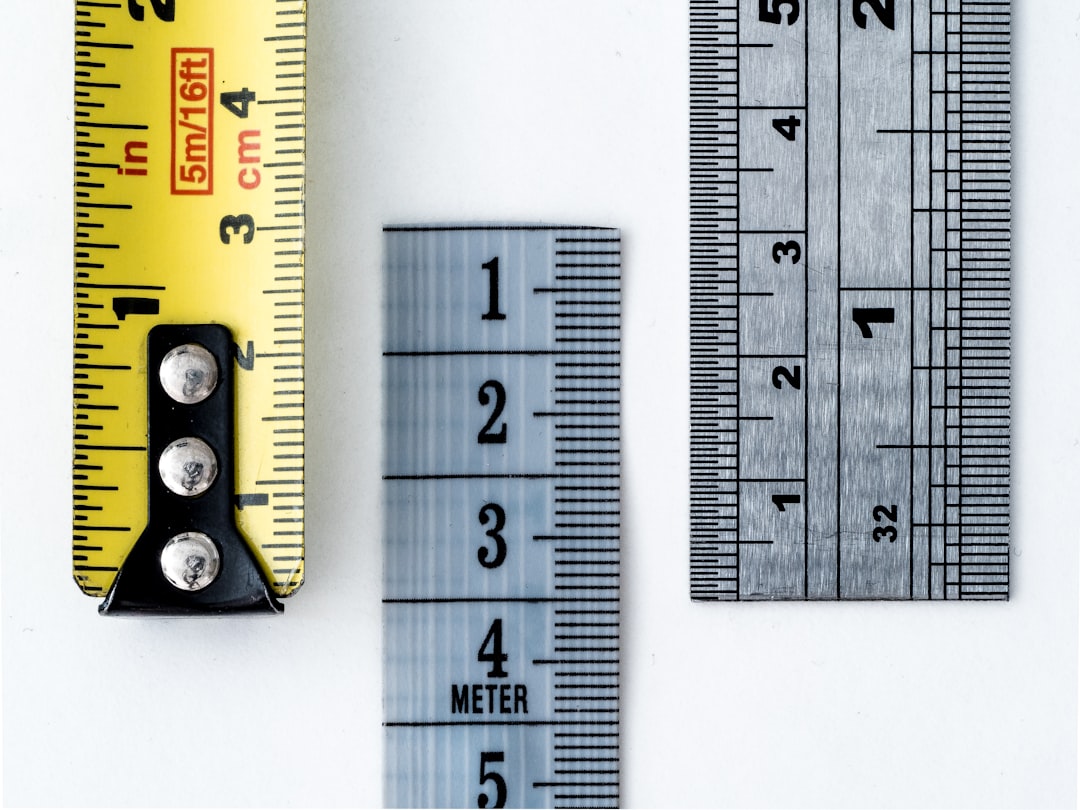
Length tells us how long, tall, wide, or far something is. We use it every day—when measuring a notebook, checking a person’s height, buying cloth, planning a journey, or finding the size of a room.
This guide explains the common units of length, how they are related, and how to convert from one unit to another. You will also find simple examples and practice questions.
What Is Length?
Length is the distance from one end of an object to the other. Depending on what we are measuring, length may also be described as height, width, depth, or distance.
For example, we measure the length of a pencil, the height of a door, the width of a table, and the distance between two cities. The quantity is the same, but the most suitable unit changes with the size of the object.
Metric Units of Length
The metric system is used in most countries. Its units are based on powers of ten, which makes conversions straightforward.
10 millimetres (mm) = 1 centimetre (cm)
10 centimetres (cm) = 1 decimetre (dm)
100 centimetres (cm) = 1 metre (m)
1,000 metres (m) = 1 kilometre (km)
When should each metric unit be used?
Millimetres are useful for very small measurements, such as the thickness of a coin. Centimetres are suitable for books, pencils, and other everyday objects. Metres are used for rooms, buildings, and short outdoor distances. Kilometres are used for long distances, such as the distance between towns.
Imperial and US Customary Units
Inches, feet, yards, and miles are commonly used in the United States and still appear in many other places.
12 inches (in) = 1 foot (ft)
3 feet = 1 yard (yd)
220 yards = 1 furlong
8 furlongs = 1 mile, which is the same as 1,760 yards.
Metric and Imperial Conversions
The following exact relationships are useful when converting between the two systems:
1 inch = 2.54 centimetres
1 foot = 30.48 centimetres
1 yard = 91.44 centimetres = 0.9144 metre
1 furlong = 201.168 metres
1 mile = 1,609.344 metres = 1.609344 kilometres
How to Convert Length Units
A simple rule helps with metric conversions: when changing from a larger unit to a smaller unit, multiply. When changing from a smaller unit to a larger unit, divide.
Example 1: Convert centimetres to metres
Convert 250 centimetres to metres. Since 100 centimetres make 1 metre, divide 250 by 100. The answer is 2.5 metres.
Example 2: Convert metres to centimetres
Convert 3.2 metres to centimetres. Multiply 3.2 by 100. The answer is 320 centimetres.
Example 3: Convert feet to centimetres
Convert 5 feet to centimetres. One foot equals 30.48 centimetres, so multiply 5 by 30.48. The answer is 152.4 centimetres.
Example 4: Convert kilometres to metres
Convert 2.75 kilometres to metres. Multiply 2.75 by 1,000. The answer is 2,750 metres.
How to Measure an Object with a Ruler
Place the ruler straight along the object. Align one end of the object with the zero mark—not simply with the physical edge of the ruler. Look directly above the scale and note where the other end finishes. Finally, write the number together with its unit, such as 8 cm or 75 mm.
If the object cannot begin at zero, record the reading at both ends and subtract the smaller reading from the larger one. For example, if an object starts at 2 cm and ends at 11 cm, its length is 11 − 2 = 9 cm.
Choosing the Right Measuring Tool
A ruler is convenient for small, straight objects. A measuring tape is better for fabric, furniture, and curved surfaces. A metre rod can measure classroom objects and short ground distances. For long distances, we usually rely on vehicle instruments, maps, or electronic measuring devices.
Common Mistakes to Avoid
Always check whether the ruler is marked in millimetres, centimetres, or inches. Start from the zero mark, keep the tool straight, and write the unit with every answer. During conversion, decide first whether you are moving to a larger or smaller unit; this helps you choose between division and multiplication.
Length and Area Are Different
Length measures a one-dimensional distance and uses units such as metres or miles. Area measures the surface covered by a shape and uses square units such as square metres or square miles. For this reason, a statement such as “1 square mile = 640 acres” is an area conversion, not a length conversion.
Practice Questions
Question 1: Convert 450 centimetres to metres.
Answer: 450 ÷ 100 = 4.5 metres.
Question 2: Convert 7 kilometres to metres.
Answer: 7 × 1,000 = 7,000 metres.
Question 3: Convert 24 inches to feet.
Answer: 24 ÷ 12 = 2 feet.
Question 4: A ribbon starts at the 3 cm mark and ends at the 18 cm mark. How long is it?
Answer: 18 − 3 = 15 centimetres.
Frequently Asked Questions
What is the standard SI unit of length?
The metre (m) is the SI base unit of length.
How many millimetres are there in one centimetre?
There are 10 millimetres in one centimetre.
How many centimetres are there in one metre?
There are 100 centimetres in one metre.
Is an inch larger than a centimetre?
Yes. One inch is exactly 2.54 centimetres.
Summary
Length measurement becomes easier when you understand the relationship between units. Use millimetres and centimetres for small objects, metres for everyday distances, and kilometres for long distances. Before converting, check the starting and required units carefully, then multiply or divide using the correct conversion factor.
Featured photo by William Warby on Unsplash.